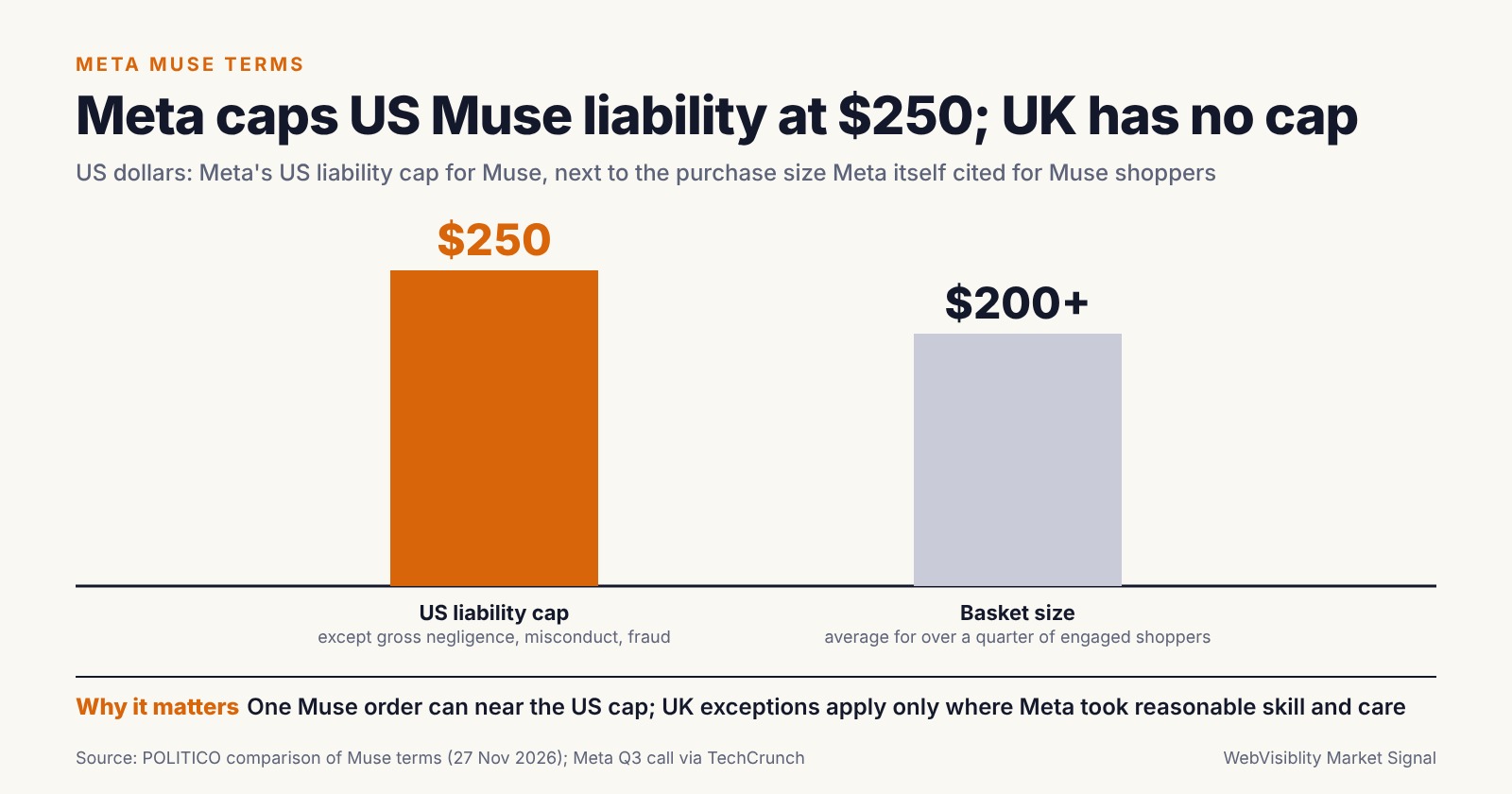
Meta will answer for more of its Muse agent's mistakes in Britain than in America. The US terms cap Meta's liability at $250, with exceptions for gross negligence, wilful misconduct or fraud. The UK terms, rewritten after weeks of talks with the Competition and Markets Authority, set no financial cap, POLITICO found when it compared the two contracts on 27 November.
At a glance
| US liability cap | $250 per the US terms |
|---|---|
| UK liability cap | None |
| UK launch | 24 November 2026 |
| US launch | 8 September 2026 |
| Muse users | More than 10 million |
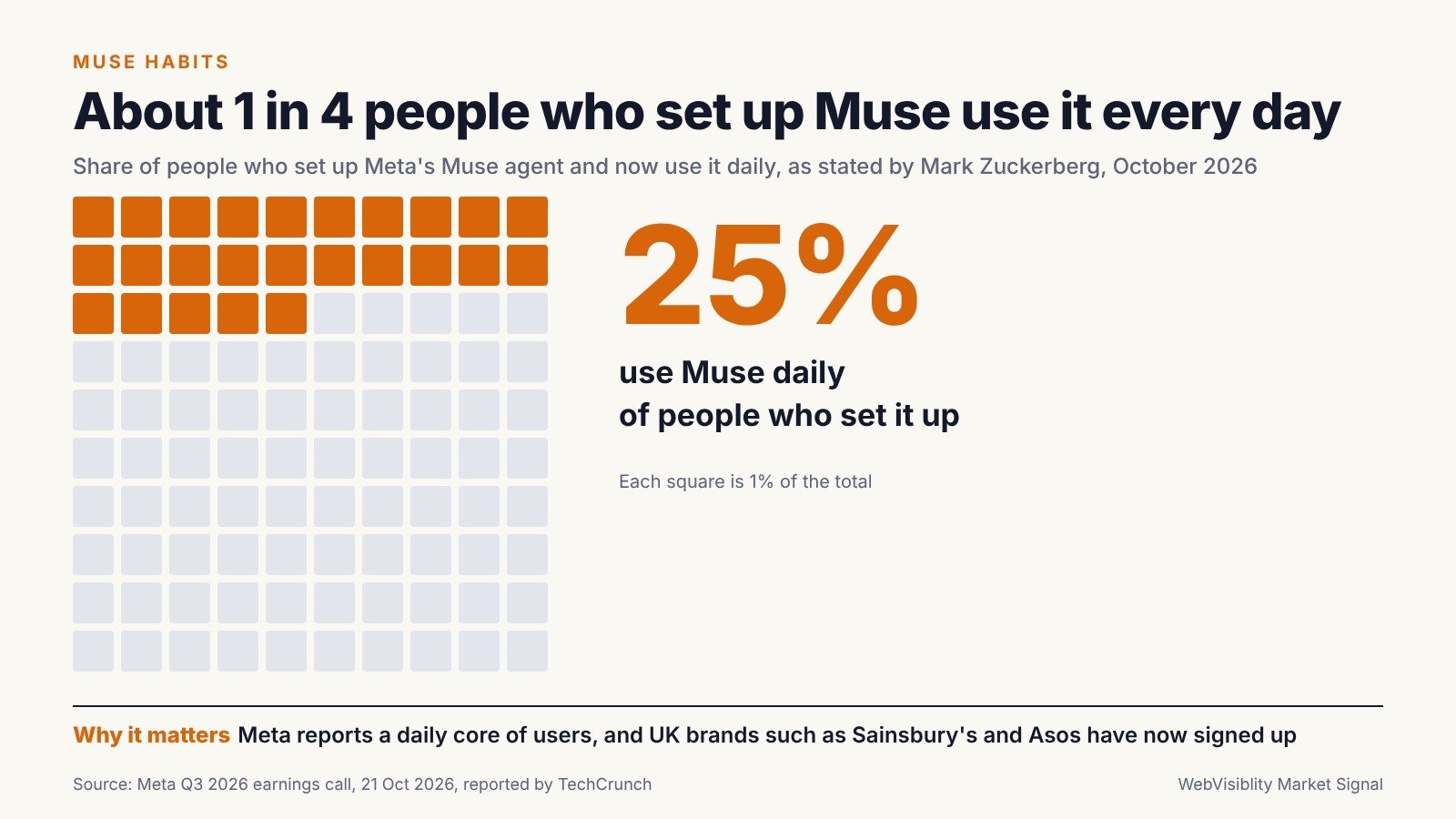
| Daily use | About 25% of people who set it up |
Do this today
Tick each step as you do it. Your ticks stay on this device. See the full list.
For marketers
For software buyers and IT teams
The signal
- US terms disclaim losses from Muse taking any unintended, erroneous or unauthorized action, to the fullest extent the law allows.
- UK exceptions apply only where Meta acted with reasonable skill and care, a standard UK law already writes into consumer service contracts.
- The CMA says Meta changed the UK terms to make them fairer after weeks of engagement, and talks continue.
- Sainsbury's, Marks & Spencer, Asos, Trainline, easyJet and JD Sports are among UK brands signed up.
- Meta also agreed to a voluntary monitoring and reporting scheme with the data regulator, the ICO.
- How UK users would fare when claiming is yet to be tested in court.
Which of these are you?
Tap the one that fits you best. We show what this story changes for you.
What happened
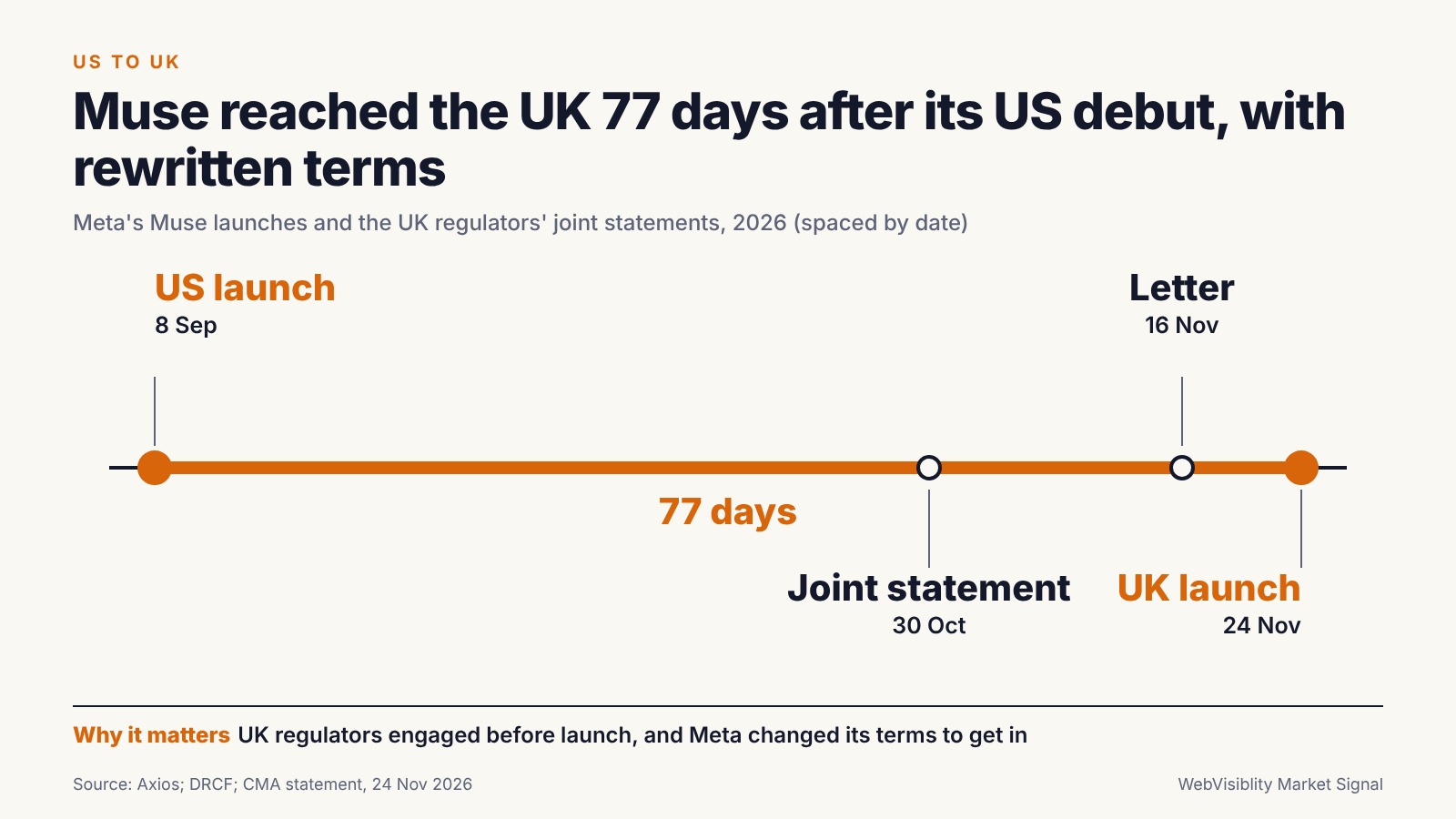
Muse, Meta's personal AI agent, can shop, book travel, fill in forms and send emails for a user, and it can make payments with the user's approval. It launched in the US on 8 September and arrived in the UK on 24 November, the first agent of its kind from a Big Tech company to launch there, according to POLITICO.
On launch day the CMA said Meta had told it about the UK plans several weeks earlier. Since then the regulator pressed Meta to make sure consumers' statutory rights showed up in the contract. Meta then changed the terms. The CMA said it would watch how Muse is presented and how it works in practice, and would not hesitate to act if it had concerns.
Three days later POLITICO set the two contracts side by side. In the US, Meta limits what it pays out to $250 unless a claim arises from gross negligence, willful misconduct or fraud. In the UK there is no cap, and the shorter list of exceptions applies only where Meta acted with reasonable skill and care or professional diligence. Meta declined to discuss the regulatory talks, POLITICO reported, while saying publicly that Muse can and will still make mistakes.
The ICO, Britain's data regulator, said it too spoke with Meta before launch. Its chief executive, Paul Arnold, said privacy must be built into agent products from the start. The CMA and ICO published joint tips telling consumers to check how much an agent can do without asking, and to start with limited access.
The UK moves follow earlier joint work. The four regulators in the Digital Regulation Cooperation Forum said on 30 October that existing legal and regulatory frameworks apply to personal agents, and wrote to ministers on 16 November. The CMA expects similar products in the coming months.
By the numbers
| What | Figure | Source |
|---|---|---|
| Meta's US liability cap for Muse | $250 | POLITICO Europe |
| Muse users, October 2026 | 10M+ | TechCrunch |
| People who set up Muse who use it daily | about 25% | TechCrunch |
| Days from US launch to UK launch | 77 | Competition and Markets Authority |
Figures exactly as published.
How to check your own agent terms
- Step 1Read
Find the clause on agent errors.
- Step 2Match
Compare it with your marketing claims.
- Step 3Localise
Check each market's consumer law.
- Step 4Explain
Tell users the risks and limits.
Timeline
Meta launches Muse in the US.
Meta says Muse has more than 10 million users.
UK regulators say existing law applies to personal AI agents.
The regulators send a joint letter to ministers.
Muse launches in the UK; the CMA says Meta changed its terms.
POLITICO finds the UK terms carry no liability cap.
“We now need to examine carefully how Muse actually works in practice.”
Why it matters
The contract gap is a preview of how agent liability will be split country by country. POLITICO's reading is that Meta accepted higher liability standards to get into the UK market. Any company that sells an AI agent, or a product with an agent inside it, should expect the same question from buyers and regulators in each market: who pays when the agent acts wrongly? The CMA's line is blunt. Terms should hold no surprises about where responsibility lies if something goes wrong.
The second lesson is about marketing copy. The CMA says how an agent is presented must match how it operates in practice, and that terms must fit the marketing and sales claims. For B2B software teams that describe their product as an autonomous agent, the launch page, the demo and the contract now need to tell the same story. A promise of hands-off automation next to a contract that disclaims every agent error is the gap the regulator named.
For brands, Muse is becoming a sales channel. Meta says over a quarter of engaged Muse shoppers had average purchases above $200, and UK retailers and travel firms signed up at launch. When an agent picks products for a buyer, AI visibility starts to mean whether the agent finds and reads your product facts correctly, not only whether a chatbot names you. Clear product pages and accurate schema markup give the agent less room to make the kind of mistake these contracts are written for.
Who is affected
| Who | What changes | Impact |
|---|---|---|
| Companies selling AI agents in the UK | Terms must avoid surprises on responsibility. | High |
| Retail and travel brands on Muse | Agents now buy on users' behalf. | Medium |
| Product marketers | Claims must match how agents really work. | Medium |
What to do now
For marketers
- Put your agent product's launch page next to its terms and list every claim the contract does not back.
- Check how your products appear when an AI shopping agent such as Muse searches for them, and fix wrong prices or specs at the source.
- Prepare a plain answer for UK buyers on who pays if your agent takes a wrong action.
For software buyers and IT teams
- Read the liability clause before letting any AI agent spend money or sign up for services.
- Start an agent on its most limited setting and require approval for purchases.
- Check whether the vendor's terms differ by country and which version applies to your contract.
Printable, one page, 9 checks. Enter your email and it opens right away.
We email you a copy. We never share your email and never send you sales emails.
Pick one. It takes 5 seconds and helps more people find these briefings. Your checklist opens straight after.
Have a work email? Use it instead and the checklist opens straight away.
Open it, then save it as a PDF or print it.
Know someone who would find this useful?
These steps are our recommendations based on this news, not statements from the companies involved.
What to watch
- CMA review of Muse in use. The regulator says it will closely review how Muse is presented and works now that it is live.
- First UK claims. Whether a dispute tests the no-cap terms, since UK redress for agent errors is untested in court.
- Product liability reform. The Law Commission has proposed extending product liability to software, including AI, which could make agent makers strictly liable for some harms.
- US terms. Whether Meta revisits the $250 cap as Muse grows past 10 million users.
- The next agents. The CMA expects more personal agents to launch in the UK in the coming months.
Questions readers ask
What is Meta Muse?
Muse is Meta's personal AI agent. It can shop, book travel, fill in forms and send emails, and it can make payments with the user's approval.
When did Meta Muse launch in the UK?
Muse launched in the UK on 24 November 2026, 77 days after its US launch on 8 September.
How much is Meta liable for if Muse makes a mistake in the US?
Meta's US terms cap its liability at $250, except for claims arising from gross negligence, wilful misconduct or fraud.
Is there a liability cap on Muse in the UK?
No. The UK terms set no financial cap. Meta is excused only where it acted with reasonable skill and care, a standard UK consumer law already implies.
Why did Meta change Muse's terms for the UK?
The CMA says Meta changed them after weeks of engagement to make them fairer for consumers and to reflect UK consumer law.
Which UK brands work with Meta Muse?
ITV named Sainsbury's, Marks & Spencer, Asos, Trainline, easyJet and JD Sports among the brands that signed deals.
Do UK consumer laws apply to AI agents?
Yes. The CMA says UK consumer protection law applies to AI products, including personal AI agents such as Muse.
Companies in this story
Sources
- Competition and Markets AuthorityOriginal
- POLITICO Europe
- ITV News
- Digital Watch Observatory
- MediaNama
- TechCrunch
- Axios
Researched, fact-checked and edited by the Market Signal desk. Read our editorial standards. Spotted an error? Email hello@webvisiblity.com and we will correct it.