OpenRouter, the service that routes AI requests across many model hosts, said on 22 November that it had off-boarded three providers and taken 125 endpoints off Zero Data Retention eligibility. The move follows research from Dragos, which sent about two million prompts containing canary credentials between July and November and found that data from at least three AI providers was exposed. OpenRouter says the findings did not show any breach of OpenRouter itself.
At a glance
| Providers off-boarded | Three, not named by OpenRouter |
|---|---|
| Endpoints pulled from ZDR | 125, some as a precaution |
| Test size | About two million prompts, July to November 2026 |
| Earliest breach | Middle of July; no provider knew until Dragos told it |
| Attacker activity | Tens of thousands of AWS API calls with stolen keys |
| Providers in talks with Dragos | About a dozen |
Do this today
Tick each step as you do it. Your ticks stay on this device. See the full list.
For marketers
For software buyers and IT teams
The signal
- Dragos hid unique web links and fake credentials in each prompt, then watched for anyone using them; the method is called canary tokens.
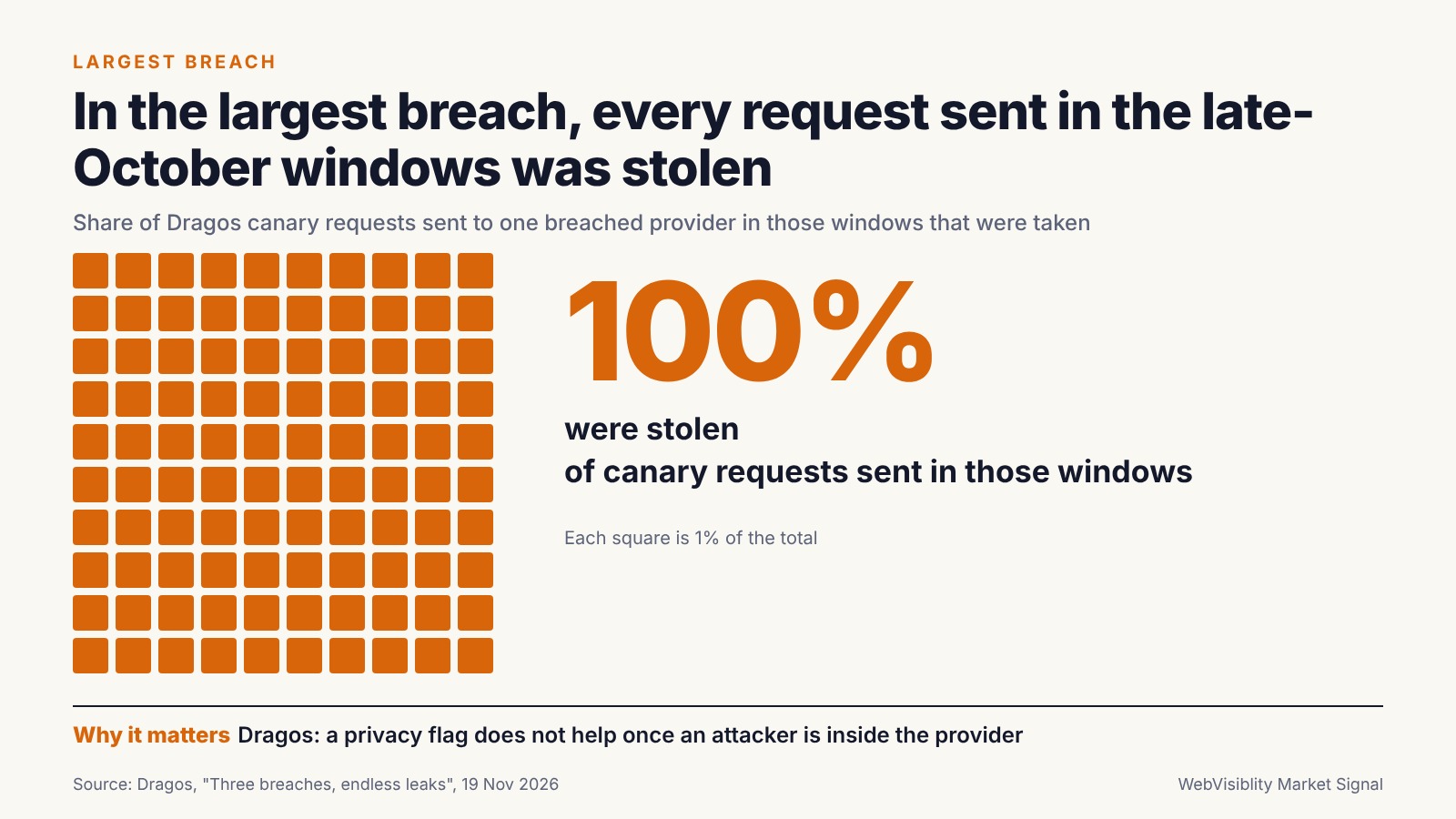
- In the largest breach, a couple hundred AWS keys were sent one per request in late October, and every request in those windows was stolen.
- In the other two breaches, some stolen requests were marked as ZDR, the setting meant to stop a provider keeping data.
- An unnamed Chinese AI lab fetched secret links from more than half of the seeded prompts sent to its models, The Hacker News reports.
- OpenRouter's post links notices from Atlas Cloud, Novita, Phala and Together but does not say which three providers it removed.
- Neither Dragos nor OpenRouter has named the breached firms or said whether they are the same three.
Which of these are you?
Tap the one that fits you best. We show what this story changes for you.
What happened
Dragos, a security company, published research on 19 November by its chief research officer HD Moore. Over five months the team sent approximately two million prompts through AI hosts, routers and marketplaces, each carrying its own fake credentials and links. When a key was tried or a link was opened, the team knew exactly which request and which provider it came from.
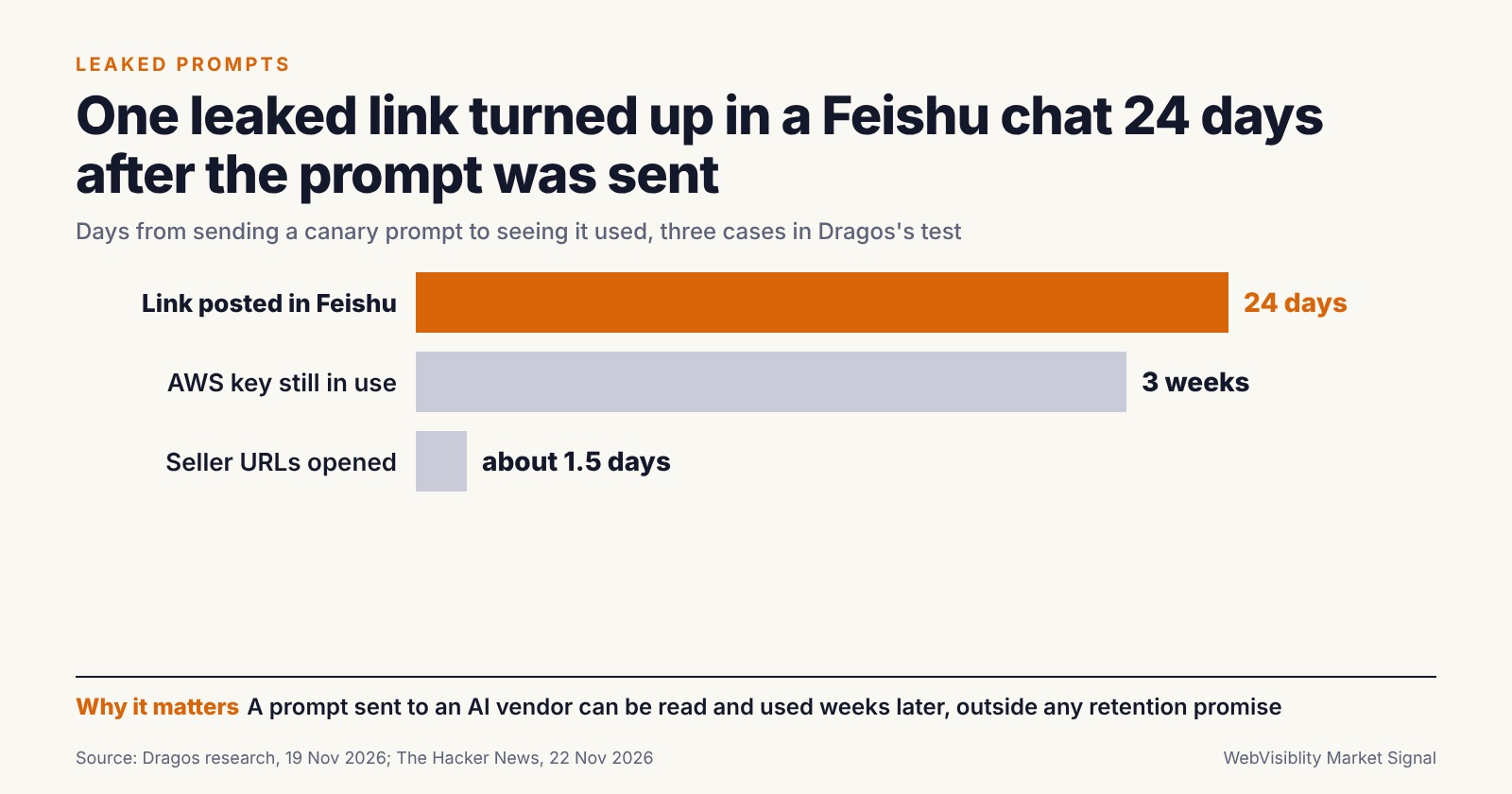
The largest breach involved AWS keys sent in short windows in late October. One key seeded on 21 October was first used the next day and was still in use three weeks later. Attackers listed storage buckets, searched secret stores and tried to switch on Bedrock models; from 1 November one of them used an AI pentest framework called ARTEX to check that stolen keys still worked. Outside the three breaches, Dragos traced about 2,000 routes and found several hundred unidentified systems in the path, plus one seller that adds about 1,000 hidden tokens to every prompt.
On 22 November OpenRouter answered. It removed three providers, took 125 endpoints out of ZDR eligibility, including additional endpoints removed as a precaution, and notified all potentially affected customers. Removed endpoints will need appropriate assurances and validation before they can regain ZDR status. OpenRouter also said it is adapting the Dragos test method for ongoing checks and building ways to verify network paths.
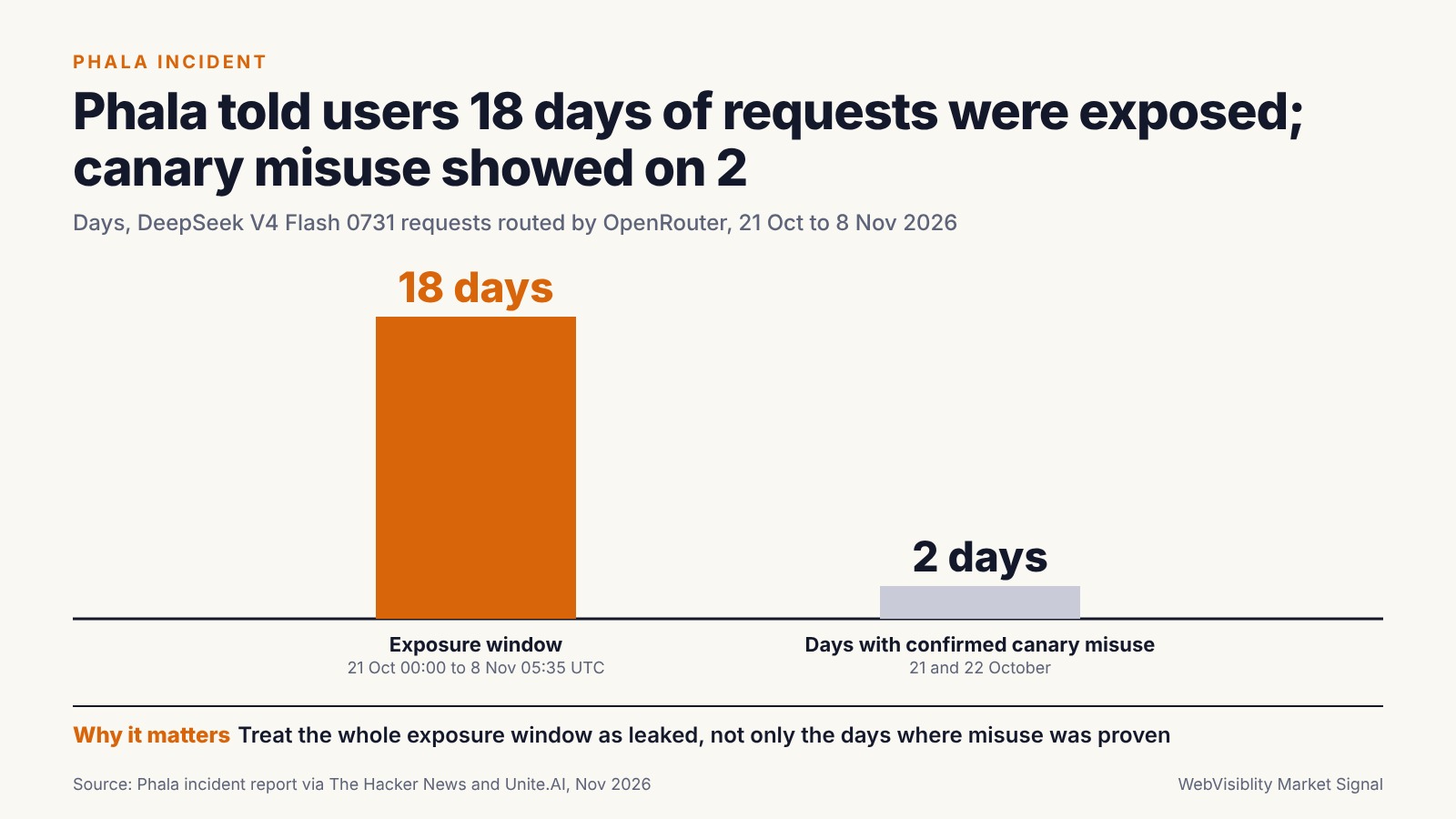
Three hosts have published their own accounts. Phala said requests for DeepSeek V4 Flash 0731 routed through OpenRouter from 21 October to 8 November should be treated as exposed. Together AI said an AI coding agent committed a credential to a public GitHub repo, which let someone download prompt samples from June and July. Novita said a routing issue sent some MiniMax requests to MiniMax's official API.
By the numbers
Timeline
Dragos starts seeding prompts; the earliest breach dates to the middle of July.
Phala's exposure window opens for DeepSeek V4 Flash 0731 requests.
One attacker starts using ARTEX agents against stolen keys.
Phala contains the intrusion.
Dragos publishes its canary research.
Together AI discloses its prompt leak.
OpenRouter removes three providers and 125 ZDR endpoints.
“A privacy flag doesn't help when the attacker is already inside.”
Who is affected
| Who | What changes | Impact |
|---|---|---|
| Teams using AI routers or marketplaces | Prompts may pass through hosts they never chose; OpenRouter pulled 125 endpoints from ZDR. | High |
| Marketers pasting customer data into AI tools | A no-retention setting did not stop theft in two of the breaches. | High |
| AI and martech vendors | Buyers will ask for proof of where prompts go, as OpenRouter now demands assurances and validation. | Medium |
| Users of DeepSeek V4 Flash 0731 via OpenRouter | Phala says requests from 21 October to 8 November should be treated as exposed. | Medium |
Why it matters
Zero data retention is a promise, not a lock. Many teams pick an AI tool because a setting says prompts will not be kept. Dragos found stolen requests that carried that flag, and an unnamed lab whose systems fetched links from about two-thirds of the requests marked no data collection or ZDR that were sent to its models. Anyone who pastes customer lists, pricing, campaign plans or login details into an AI tool is trusting every company on the request's path, not only the one on the contract.
The path is often longer than buyers think. Routers and marketplaces pass requests to hosts the user never chose, and Dragos found a router quietly forwarding some of its traffic to a marketplace. Marketing and sales software that adds AI features may sit on the same kind of chain. Vendor reviews now need a plain question: which model hosts see our prompts, and how would we know if one was breached? Dragos notes that none of the three breached providers knew until notified.
Vendors will be asked to prove claims, not just state them. OpenRouter now wants assurances and validation before it restores ZDR status and plans to run canary checks itself. AI and martech vendors that sell on privacy should expect buyers to ask for the same evidence, and those that can show it will have an easier time in procurement.
What to do now
For marketers
- List every AI tool your team uses and note which ones take customer or pricing data.
- Remove API keys, passwords and private links from prompts and shared AI workspaces.
- Ask each martech vendor with AI features which model hosts receive your prompts.
- Rotate any credential that has ever been pasted into an AI chat or agent.
For software buyers and IT teams
- Add questions on onward routing and breach notice to AI vendor security reviews.
- Pin sensitive AI traffic to providers you contract with directly.
- Place a canary credential in agent contexts and treat any use as an incident.
- Check that privacy settings actually change where requests are sent, not just how they are labelled.
Printable, one page, 11 checks. Enter your email and it opens right away.
We email you a copy. We never share your email and never send you sales emails.
Pick one. It takes 5 seconds and helps more people find these briefings. Your checklist opens straight after.
Have a work email? Use it instead and the checklist opens straight away.
Open it, then save it as a PDF or print it.
Know someone who would find this useful?
These steps are our recommendations based on this news, not statements from the companies involved.
What to watch
- Names. Whether Dragos or OpenRouter identifies the three breached providers; neither has so far.
- More disclosures. Dragos is working with about a dozen providers and OpenRouter notes not every affected provider has posted.
- ZDR rules. What OpenRouter will accept as assurances and validation before endpoints regain ZDR status.
- Other routers. Whether rival AI gateways adopt canary testing of their own hosts.
How a stolen prompt was used, in Dragos's largest breach
- 1Seed
Dragos sent each fake AWS key in exactly one request to one provider.
- 2Steal
Attackers inside the provider copied every request in those windows.
- 3Test
They tried the keys, in some cases within a few hours.
- 4Explore
They listed storage, searched secret stores and tried to enable Bedrock models.
- 5Automate
From 1 November one attacker ran ARTEX agents to check keys were still live.
Questions readers ask
What happened with OpenRouter and the three AI providers?
OpenRouter off-boarded three inference providers on 22 November 2026 and removed 125 endpoints from ZDR eligibility after Dragos research showed provider data had been exposed. OpenRouter itself was not breached.
Which AI providers were removed from OpenRouter?
OpenRouter has not named them. Its post links incident notices from Atlas Cloud, Novita, Phala and Together, but it does not say whether those are the three it removed.
What is Zero Data Retention in AI?
Zero Data Retention, or ZDR, is a setting under which a provider agrees not to store prompts and outputs. Dragos found some stolen requests were marked as ZDR, so the flag did not stop theft.
How did Dragos find the AI prompt leaks?
Dragos put unique fake credentials and secret links into about two million prompts, then watched for anyone using them. Each use pointed to the exact request and provider.
Was my data exposed through OpenRouter?
OpenRouter says it has notified all potentially affected customers. Phala told users of DeepSeek V4 Flash 0731 between 21 October and 8 November to treat those requests as exposed and rotate secrets.
Is it safe to put company data into AI tools?
It depends on every host in the chain. Dragos advises self-hosting where affordable, using first-tier providers directly, avoiding reseller marketplaces and checking that privacy settings change routing.
What is a canary token?
A canary token is a fake credential or link that has no real use, so any attempt to use it signals a leak. Dragos used them to trace stolen prompts back to providers.
Companies in this story
Sources
- OpenRouterOriginal
- DragosOriginal
- The Hacker News
- Unite.AI
- AI Chat Daily
- LavX News
Researched, fact-checked and edited by the Market Signal desk. Read our editorial standards. Spotted an error? Email hello@webvisiblity.com and we will correct it.